Minnesota homeowners don’t have much room for error when it comes to heating. When temperatures drop, you need a system that keeps your home comfortable, reliably and efficiently.
For many Twin Cities homeowners replacing an aging system, that leads to one increasingly common question: Heat pump or furnace—which is the better choice?
Unfortunately, the answer isn’t the same for every house.
Gas furnaces remain a familiar and dependable option for cold Minnesota winters. At the same time, heat pump technology has come a long way, making heat pumps a practical option for more Twin Cities homes than even a decade ago. Some homeowners may even benefit from combining the two in a dual-fuel system.
Ultimately, the best choice depends on your existing HVAC setup, home size, comfort preferences, energy costs, budget, and how you want to heat and cool your home throughout the year.
If you’re in the market for a new heating system, here’s what to consider when comparing a furnace vs. heat pump.
How Does a Gas Furnace Work?
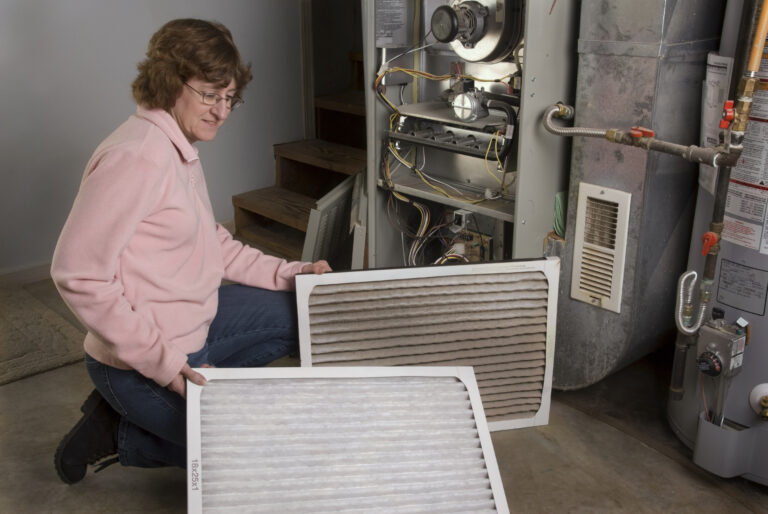
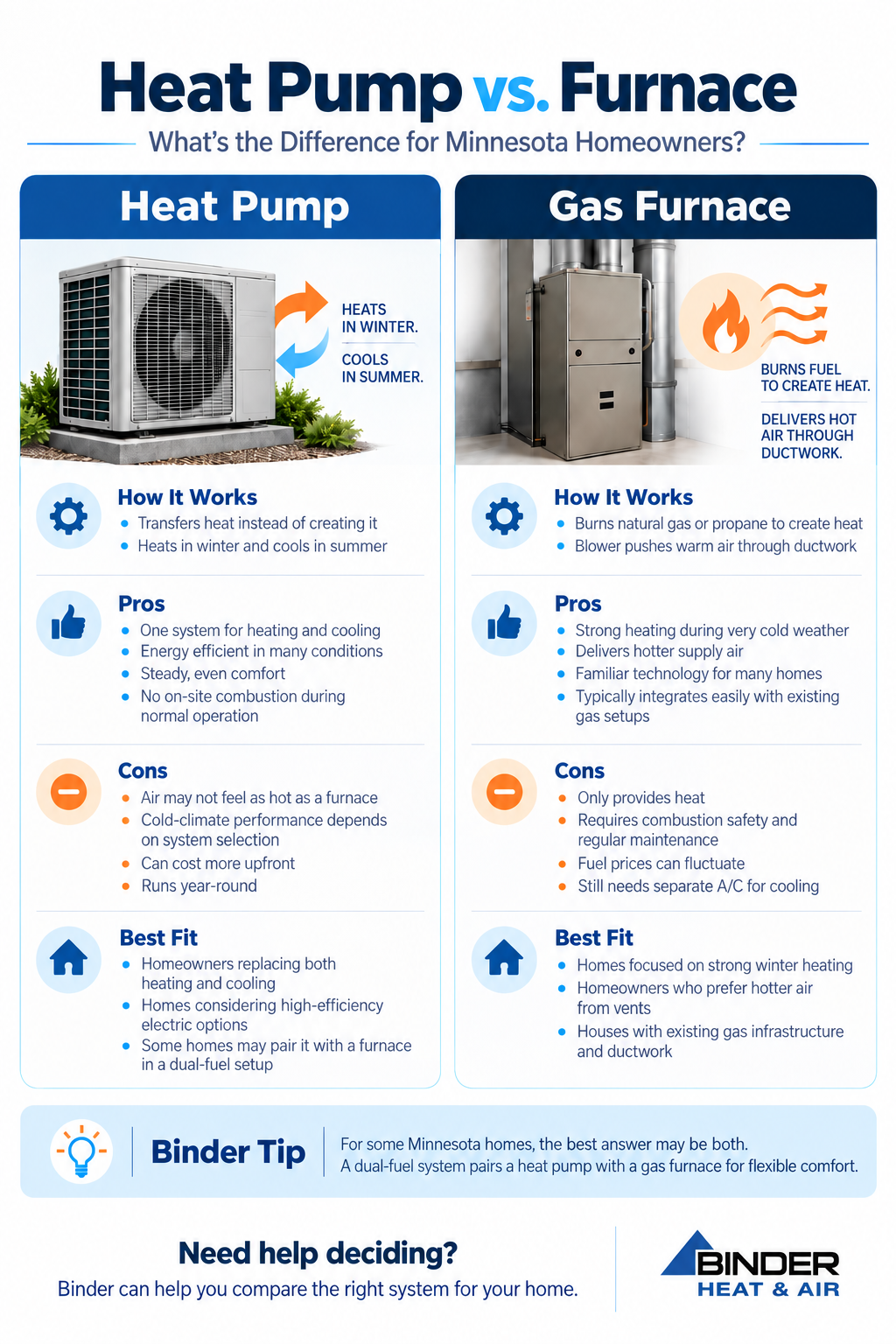
A gas furnace creates heat by burning fuel, typically natural gas or propane. The heat produced by the burner passes through a heat exchanger, and a blower moves heated air through your home’s ductwork.
For many Twin Cities homeowners, this is the heating system you’re most familiar with. Furnaces are well suited to Minnesota winters and can deliver warm supply air quickly when outdoor temperatures fall.
Pros of a Gas Furnace
- Strong heating performance in very cold weather. A properly sized furnace can provide dependable heat even during Minnesota’s coldest stretches. That makes it an attractive option for homeowners who want a system designed primarily around winter heating performance.
- Warmer supply air. Furnaces typically deliver hotter air through the vents than heat pumps. For homeowners accustomed to that blast of warm air when the system turns on, a furnace may feel more immediately comfortable.
- Familiar technology. Gas furnaces are common throughout the Twin Cities, which means many homes already have the gas connections, ductwork, venting, and other infrastructure necessary for furnace installation or replacement.
- Heating equipment isn’t used for cooling. Most furnace components get a break during the summer months while not heating air. Because a heat pump fully operates during both heating and cooling seasons, its components may accumulate more annual run time.
- Several efficiency and equipment options are available. Homeowners can choose among different furnace efficiencies, blower technologies, and system configurations depending on their home and budget.
Cons of a Gas Furnace
- It only provides heat. A furnace still needs to be paired with an A/C system or another cooling solution if you want central cooling during summer.
- Fuel-burning equipment requires proper maintenance. Because gas furnaces use combustion, regular professional maintenance is especially important. Homeowners should also have functioning carbon monoxide detectors and take unusual odors or equipment problems seriously.
- Operating costs can fluctuate. The cost of running a furnace depends in part on natural gas or propane prices, which can change significantly over time.
- It may not offer the same year-round efficiency advantages. A heat pump transfers heat rather than creating it through combustion, which can make it an efficient option during many parts of the heating season.
- You’re maintaining separate heating and cooling equipment. A traditional furnace and central A/C setup involves two primary pieces of equipment rather than one heat pump system that can handle both jobs.
How Does a Heat Pump Work?
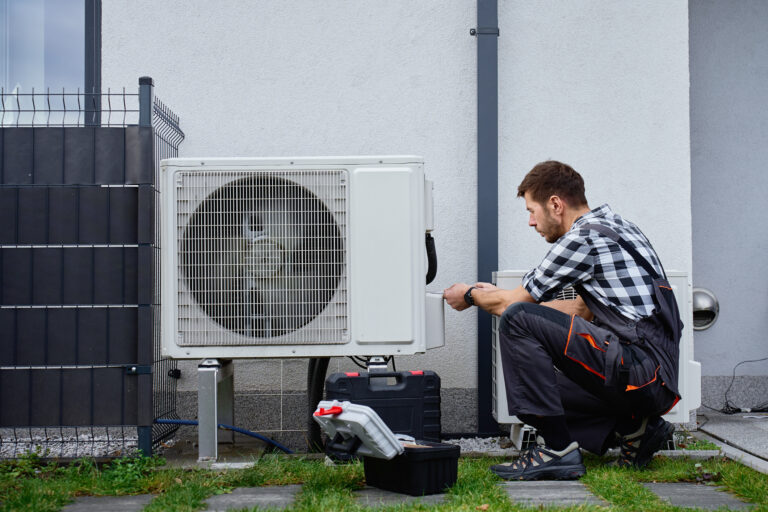
Unlike a furnace, a heat pump doesn’t create heat by burning fuel. It transfers heat from one place to another using refrigerant. During winter, an air-source heat pump extracts available heat from the outdoor air and moves it inside. During summer, it reverses the process, removing heat from your home much like a traditional A/C system.
There are several types of heat pumps, including ducted air-source systems, ductless mini-splits, and geothermal systems. For homeowners comparing a gas furnace vs. heat pump as a conventional whole-home HVAC replacement, an air-source heat pump is typically the most direct comparison.
Pros of a Heat Pump
- It heats and cools your home. One system can provide heating in winter and cooling in summer, potentially simplifying your overall HVAC setup.
- Heat pumps can be highly efficient. Rather than generating all their heat directly, heat pumps transfer existing heat. That can make them an efficient way to heat a home, particularly during milder temperatures.
- Modern systems perform better in cold weather. Today’s cold-climate heat pumps can continue providing heat well below freezing. That makes them much more relevant to Minnesota homeowners than older generations of heat pump technology.
- They don’t require on-site combustion for normal operation. Air-source heat pumps run on electricity rather than burning natural gas or propane inside the home.
- They can provide more consistent temperatures. Heat pumps often run for longer periods at lower output rather than producing short bursts of very hot air. Many homeowners like the steady, even comfort this provides.
- They offer flexible installation options. Depending on the home, heat pumps can work with existing ductwork or as ductless systems. That flexibility can be especially useful for additions, older homes, and spaces that are difficult to heat or cool.
Cons of a Heat Pump
- Supply air may not feel as hot. A heat pump can warm your home effectively without producing the same hot air homeowners may be accustomed to feeling from furnace vents.
- Cold-weather performance needs to be considered carefully. Not every heat pump is designed for a Minnesota winter. Equipment selection, sizing, home insulation, and backup heat strategy all matter.
- Upfront costs may be higher. Depending on the system and installation, a heat pump may require a larger initial investment than a straightforward furnace replacement.
- It works throughout the year. Because the same equipment may provide both heating and cooling, a heat pump can accumulate more run time than a furnace that sits idle during summer.
- Electricity costs affect operating expenses. A heat pump may be highly efficient, but that doesn’t automatically mean it’ll cost less to operate in every home. Local electricity rates, natural gas prices, system efficiency, outdoor temperature, and the home itself all affect the comparison.
Heat Pump vs. Furnace in Minnesota: Do You Have to Choose?
Not necessarily. For some Twin Cities homeowners, the best answer isn’t strictly a heat pump or a furnace. It can be both.
A dual-fuel system pairs an electric heat pump with a gas furnace. The heat pump can handle cooling and much of the heating during milder weather, while the furnace can take over when outdoor temperatures reach a point where gas heat makes more sense for that particular system and home.
That can give homeowners some of the efficiency and year-round versatility of a heat pump without giving up the cold-weather reassurance of a furnace.
It’s one reason a gas furnace vs. heat pump comparison shouldn’t be based on equipment specifications alone. The best system is the one designed around your actual home.
What to Consider Before Choosing
Before replacing your heating system, look at the bigger picture:
- What equipment do you already have?
- Does your home have natural gas service?
- What condition is your ductwork in?
- Do you also need to replace your A/C?
- How well insulated and air-sealed is the home?
- Are certain rooms difficult to heat or cool?
- How long do you expect to stay in the home?
- Do you prefer hotter or more consistent air?
- Would a dual-fuel system make sense?
- Does your utility company or other local programs offer rebates to offset some of the upfront equipment costs?
Proper sizing matters, too. HVAC equipment shouldn’t be selected based on square footage alone. A professional should evaluate your home’s heating and cooling load, layout, insulation, windows, ductwork, and other factors before recommending equipment.
Find the Right Heating System for Your Twin Cities Home
Many Minnesota homeowners love their new heat pumps. Others swear by their tried-and-true gas furnaces.
At Binder, we’d rather look at your home, listen to what matters to you, and recommend the system that actually makes sense. Whether that’s a furnace, heat pump, or combination of the two, you should understand why you’re choosing it and what you can expect from it.
When you’re ready to compare your options, schedule a heating and cooling consultation with Binder. We’ll help you find a system that fits your home, your budget, and everything a Minnesota winter can throw at you.
Frequently Asked Questions
When to use a heat pump vs. furnace?
A heat pump can be a great choice when you want efficient heating and cooling from the same system, especially with modern cold-climate equipment. A furnace can make sense when strong cold-weather heating is the priority or when your home already has a well-designed gas heating setup. In some Minnesota homes, a dual-fuel heat pump and furnace system offers advantages from both.
What are the benefits of a heat pump?
A heat pump can provide both heating and cooling, operate efficiently by transferring heat rather than creating it through combustion, and provide steady indoor temperatures. Modern cold-climate models also perform much better at low outdoor temperatures than earlier generations of heat pumps.
What are the benefits of a furnace?
Gas furnaces provide strong heating performance during very cold weather, deliver warm supply air quickly, and are already supported by the ductwork and gas infrastructure in many Twin Cities homes. They’re also familiar technology with a wide range of equipment and efficiency options available.
How do I size a heating system?
A heating system should be sized according to your home’s actual heating load rather than square footage alone. An HVAC professional should consider factors such as insulation, windows, air leakage, orientation, home layout, ductwork, and Minnesota temperatures. Oversized equipment can create its own comfort and efficiency problems, so bigger isn’t automatically better.
How do I choose a heating and air conditioning system?
Start with your home rather than a particular piece of equipment. Consider your current HVAC setup, heating and cooling needs, utility options, comfort preferences, efficiency goals, and budget. A qualified HVAC professional can compare furnace, heat pump, and other home heating options, and explain the trade-offs before you make a decision.