If you live in a two-story home in St. Paul or the greater Twin Cities metro area, there’s a good chance you’ve dealt with at least one of these situations before:
- The upstairs feels too hot in the summer
- One bedroom is always colder than the rest of the house
- You’re constantly adjusting the thermostat
- Certain rooms never seem comfortable, no matter the season
These are some of the most common comfort complaints homeowners have. And while many people assume this is mostly an “old house” problem, we actually see uneven heating and cooling in plenty of newer homes, too. Larger suburban homes, open floor plans, high ceilings, oversized windows, and two-story layouts can all make consistent comfort more difficult.
In many cases, the issue isn’t your furnace or A/C unit itself. It’s how air is being distributed throughout the home. That’s where HVAC zoning can help.
A properly designed zoning system can improve comfort, reduce hot and cold spots, and give homeowners better control over different areas of the house. But zoning isn’t always straightforward, especially if the home wasn’t fully set up for it during construction.
At Binder, we’ve worked with Twin Cities homeowners since 1927, and we’ve seen firsthand how effective zoning can be when it’s done correctly. Here’s what you should know before deciding whether a zoned HVAC system is worth it for your home.
What Is HVAC Zoning?
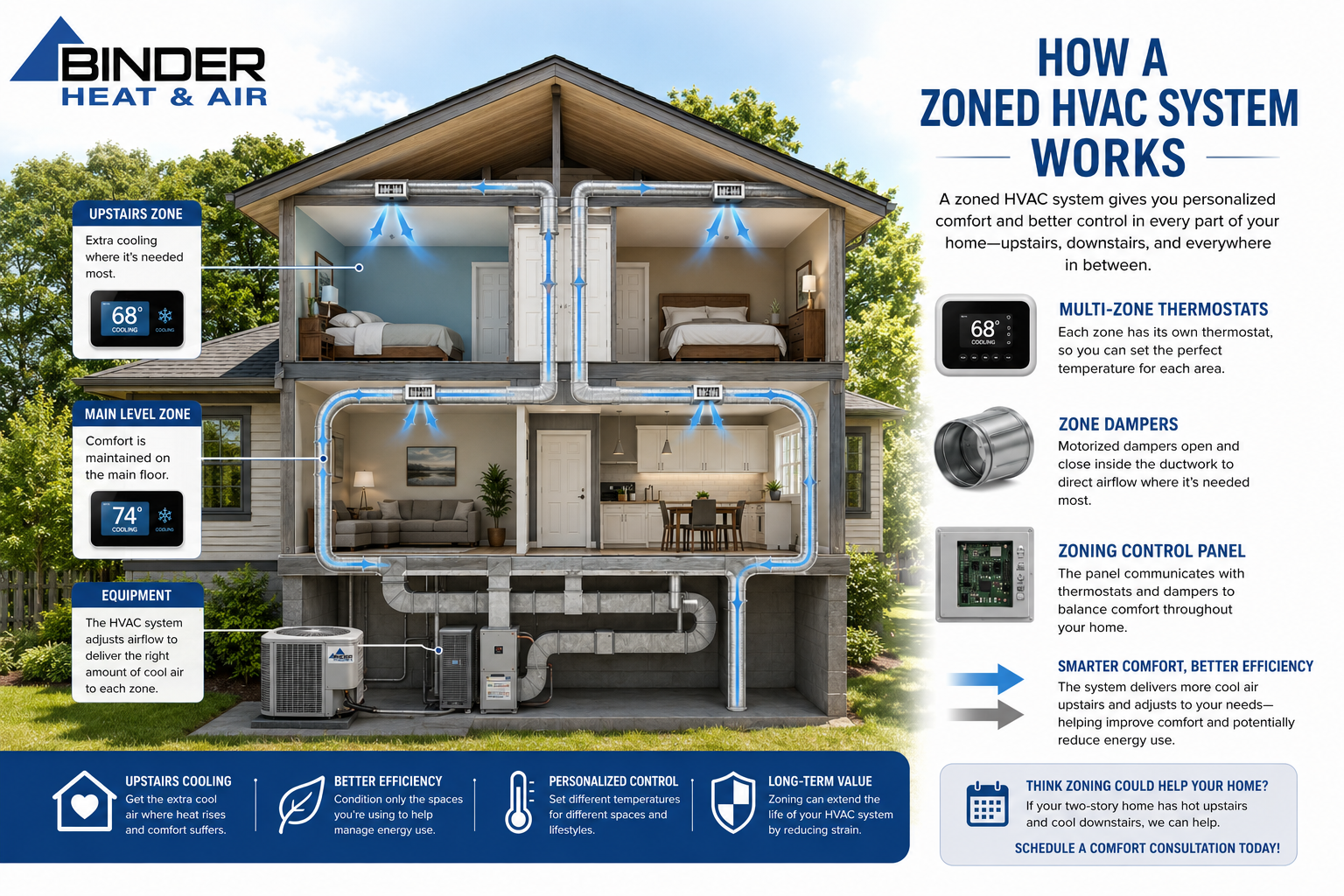
HVAC zoning is a way to divide your home into separate temperature-controlled areas, or “zones.” Instead of one thermostat controlling the entire house, a zoning system uses:
- Multiple thermostats or sensors
- A control panel
- Motorized zone dampers located inside the ductwork
These dampers open and close to direct airflow where it’s needed most. For example, if the upstairs of your home gets too warm in the afternoon sun, the zoning system can direct more cooled air upstairs without overcooling the main level.
Many systems also use a smart thermostat with multi-zone functionality, which allows homeowners to control temperatures in different parts of the home independently.
Why Two-Story Homes Often Have Comfort Problems
A two-story home naturally presents heating and cooling challenges. Heat rises, which means:
- Upper floors often get hotter in summer
- Lower levels may stay cooler longer
- Airflow can become uneven throughout the house
Older homes throughout St. Paul and Minneapolis can have even more issues due to:
- Older ductwork designs
- Limited insulation
- Original HVAC systems that weren’t sized correctly
- Home additions or remodeled spaces
- Sunrooms or finished attic spaces
But newer homes are not immune. In fact, many large homes in Twin Cities suburbs and newer subdivisions have comfort issues shortly after move-in. Builders may prioritize visible upgrades like countertops, flooring, and finishes, while HVAC zoning may be treated as an optional add-on. The home may look brand new, but the upstairs bedrooms can still be too hot in summer or hard to keep comfortable in winter.
In many situations, zoning can help, but it isn’t always the only answer.
How HVAC Zone Dampers Work
At the heart of most zoning systems are zone dampers. These dampers are installed inside your ductwork and act like traffic controls for airflow. When a thermostat calls for heating or cooling in a specific zone, the dampers adjust to direct conditioned air where it’s needed.
For example: Upstairs dampers may open more during summer afternoons, whereas main floor dampers may take priority during winter mornings. This allows your HVAC system to distribute air more strategically instead of treating the entire home as one single space.
When designed correctly, zoning can:
- Improve comfort
- Reduce thermostat battles
- Help balance airflow
- Reduce unnecessary heating and cooling
Signs Your Home May Benefit From HVAC Zoning
Not every home needs zoning, but there are several signs that it may help.
1. Your Upstairs Is Always Hot
One of the biggest complaints we hear is: “Our upstairs is always warmer than the rest of the house.” This is extremely common in Minnesota homes, especially older two-story houses. A zoning system can often help direct more cooling upstairs during warmer months.
2. Certain Rooms Never Feel Comfortable
Do you have:
- A bonus room over the garage?
- A finished attic?
- A sunroom?
- Bedrooms that are always colder?
These spaces often experience airflow issues that zoning may help address.
3. Your Thermostat Is Constantly Being Adjusted
If family members are always changing the thermostat because different parts of the home feel uncomfortable, HVAC zoning may improve overall temperature balance.
4. Your Home Has Multiple Levels Or Additions
You’ll likely benefit from better airflow management if your home has:
- Multiple floors
- Finished basements
- Additions
- Large open areas
Newer Homes Can Benefit From HVAC Zoning Too
It’s easy to assume that uneven heating and cooling only happens in older homes with aging ductwork or outdated equipment. But many newer two-story homes have the same issue, sometimes even more noticeably.
Large suburban homes often have:
- Bigger floor plans
- More bedrooms on the upper level
- Large south- or west-facing windows
- Open staircases
- High ceilings
- Long duct runs
- Bonus rooms over garages
All of these factors can make it harder for one thermostat to manage the entire home.
In many newer homes, the ductwork may already be laid out in a way that can support zoning. The missing pieces are often the zone dampers, control panel, and multi-zone thermostat needed to actually separate the home into comfort zones.
That means homeowners may not need a full system replacement to improve comfort. In some cases, Binder can evaluate the existing ductwork and determine whether a zoning-damper retrofit is a practical option.
Is HVAC Zoning Worth It?
For many homeowners, yes—but it depends on the house. A properly designed zoning system can:
- Improve comfort dramatically
- Reduce hot and cold spots
- Help distribute airflow more evenly
- Improve temperature control
But zoning systems are not magic fixes for every problem. That’s important to understand.
Why Some Zoned Systems Don’t Work Well
One reason some homeowners become frustrated with zoning is that the original system wasn’t designed correctly. At Binder, we often see situations where:
- The ductwork is undersized
- The HVAC equipment is oversized
- Airflow wasn’t balanced properly
- Dampers were added without proper planning
In older Minnesota homes especially, retrofitting zoning can become complicated if the existing ductwork layout doesn’t support it. In newer homes, the challenge can be different. Sometimes the home has the basic duct layout needed for zoning, but the builder did not include the full zoning package during construction.
That’s why it’s important to have an HVAC professional evaluate:
- The ducting system
- Airflow performance
- Equipment sizing
- Static pressure
- Existing insulation and air sealing
- Whether the home was prepped for future zone dampers or controls
At Binder, we believe in providing honest recommendations. We know that sometimes zoning is the right answer. But we also know that sometimes there are better or simpler solutions available. Contact us today for a FREE, no-pressure consultation.
Alternatives To HVAC Zoning
Depending on your home, there may be other ways to improve comfort. These may include:
1. Duct Modifications
In some cases, airflow problems are caused by poorly designed or undersized ductwork. Adjustments to the duct system may improve comfort without a full zoning retrofit.
2. Mini-Split Systems
A mini-split heat pump may actually be the better option for difficult spaces with no existing ductwork. This may include:
- Finished attics
- Bonus rooms
- Sunrooms
- Older additions
3. Equipment Upgrades
Older furnaces and air conditioners sometimes struggle to maintain balanced airflow throughout the home. Upgrading to newer variable-speed systems can help improve comfort and airflow control.
Can HVAC Zoning Save Energy?
Potentially, yes. By directing heating and cooling only where it’s needed, zoning may reduce unnecessary system runtime in some situations. However, the biggest benefit for most homeowners is comfort, not massive utility savings.
A properly designed system should focus first on:
- Consistent temperatures
- Balanced airflow
- Better comfort throughout the home
Energy efficiency is often a secondary benefit.
Multi-Zone Thermostats Make Control Easier
Modern zoning systems often use smart thermostats with multi-zone functionality. These systems allow homeowners to:
- Set different temperatures by area
- Create heating and cooling schedules
- Adjust temperature settings remotely
- Improve comfort based on occupancy
For larger homes or families with different comfort preferences, this flexibility can make a noticeable difference.
Why Twin Cities Homeowners Trust Binder
Many homes throughout St. Paul and Minneapolis were built decades ago, long before modern HVAC zoning became common. Retrofitting zone dampers into an older home requires careful planning—not just installing parts and hoping for the best.
Newer homes can bring their own challenges, too. Large suburban homes may have longer duct runs, more square footage, multiple upper-level bedrooms, and layouts that make one thermostat work too hard.
This is why experience matters.
At Binder, we’ve been helping Twin Cities homeowners solve comfort problems since 1927. We focus on:
- Honest evaluations
- Practical recommendations
- Long-term comfort solutions
- Quality workmanship
If HVAC zoning makes sense for your home, we’ll explain why. If another option would work better, we’ll explain that too. Our goal is to help you make the right decision for your home—not push unnecessary upgrades.
Ready To Solve Hot And Cold Spots In Your Home?
If your two-story house is hot upstairs, certain rooms never feel comfortable, or your home struggles with uneven temperatures, it may be time to explore your options. Our experienced HVAC team can help you determine the best solution for your home.
Contact us today for a FREE, no-pressure consultation.