When homeowners start thinking about replacing their heating and cooling system, they often compare furnace brands, A/C options, heat pumps, and efficiency ratings. But there’s another option that’s worth considering, especially if you’re looking for long-term comfort, energy savings, and a more sustainable way to heat and cool your home: residential geothermal HVAC.
A geothermal system uses the steady temperature below the ground to help heat and cool your home. Since the earth maintains a more consistent temperature than the outdoor air, a residential geothermal system can operate efficiently through Minnesota’s hot summers and cold winters.
For homeowners, the first step is understanding how these systems work, what benefits they offer, and whether geothermal is the right fit for your home. Here’s what you need to know.
What Is A Residential Geothermal HVAC System?
A residential geothermal HVAC system is a heating and cooling system that transfers heat between your home and the ground.
Instead of creating heat by burning fuel or pulling heat from the outdoor air, geothermal systems move heat using underground piping and a heat pump. In the winter, the system pulls heat from the ground and brings it into your home. In the summer, the process reverses, moving heat out of your home and back into the ground.
Because geothermal systems use the earth’s natural temperature stability, they can provide reliable year-round comfort with excellent energy efficiency.
How Residential Geothermal Systems Work
A residential geothermal system typically includes three main parts:
- An underground loop system
- A geothermal heat pump
- Your home’s ductwork or HVAC distribution system
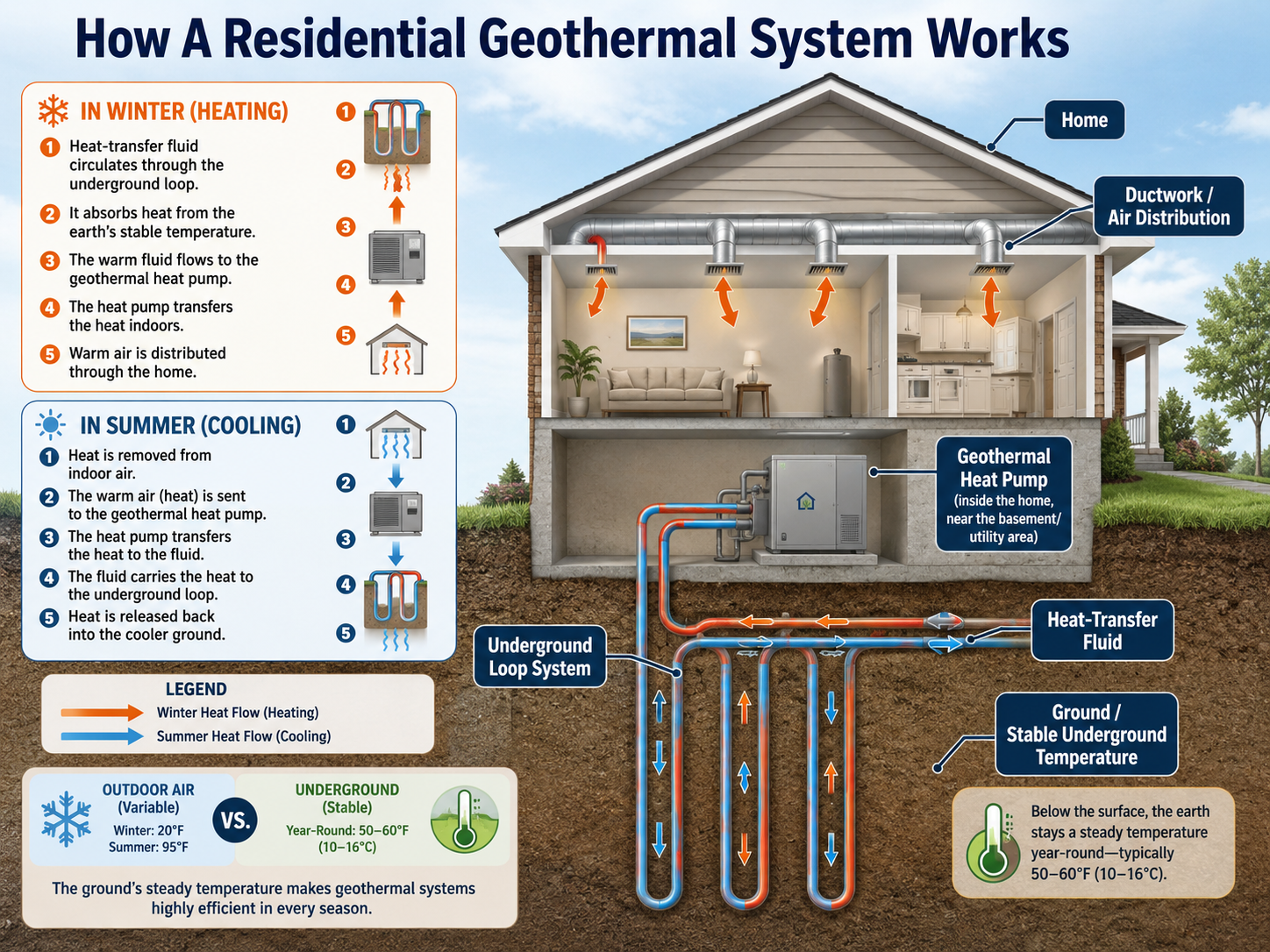
The underground loop contains a heat-transfer fluid that circulates through pipes installed below the surface. This loop absorbs or releases heat depending on the season.
During the winter, the fluid absorbs heat from the ground and carries it to the geothermal heat pump inside your home. The system then distributes that heat throughout your home.
During the summer, the system removes heat from your indoor air and transfers it back into the ground. This helps keep your home cool without relying on the same outdoor-air exchange process used by standard cooling systems.
The Benefits Of Residential Geothermal HVAC
A geothermal system is a larger upfront investment than many conventional HVAC options, but it can offer significant long-term advantages. For the right home, those benefits can be well worth considering.
1. Lower Energy Use And Utility Costs
One of the biggest reasons homeowners explore geothermal is efficiency.
Because the system transfers heat instead of generating it from scratch, it can use significantly less energy than traditional heating and cooling equipment. That can lead to lower monthly utility bills over time, especially in homes with high heating and cooling demand.
In Minnesota, where homeowners rely heavily on heating in the winter and cooling in the summer, energy efficiency matters. A properly designed geothermal system can help reduce operating costs while keeping your home comfortable year-round.
2. Heating And Cooling From One System
Like mini-split heat pumps, a residential geothermal system provides both heating and cooling. That means one system can help keep your home warm during January cold snaps and cool during humid July afternoons.
This is one of the reasons geothermal appeals to homeowners who are thinking long-term. Instead of viewing heating and cooling as separate needs, geothermal offers a whole-home comfort solution designed to perform through every season.
3. Long System Life
Geothermal systems are known for their long lifespan.
The indoor heat pump components need regular maintenance, much like other HVAC equipment. However, the underground loop system is designed to last for many years when properly installed.
For homeowners planning to stay in their home long-term, this durability can be a major benefit. While the initial installation cost is higher, the long-term performance and lower operating costs may make geothermal a strong investment.
4. Reliable Comfort In Minnesota Weather
Minnesota weather is not always kind to HVAC systems. Outdoor temperatures can swing from well below freezing in winter to hot and humid in summer.
Because geothermal relies on the stable temperature underground, it is less affected by outdoor temperature extremes than many traditional systems. That steady source of heat exchange helps the system operate efficiently even when the weather above ground is anything but predictable.
For homeowners across the Twin Cities, that consistency can make a real difference in day-to-day comfort.
5. A More Sustainable Heating And Cooling Option
Geothermal systems are often attractive to homeowners who want to reduce their environmental impact.
By using the natural temperature of the earth and reducing reliance on fossil fuels, geothermal can help lower household energy use and emissions. In fact, it is one of the more sustainable residential HVAC options available.
That doesn’t mean geothermal is the perfect fit for every property. Location, lot size, soil conditions, installation access, budget, and long-term goals all matter. But for the right home, it can be an excellent way to invest in efficient, responsible comfort.
6. Lower Maintenance Compared To Some Conventional Systems
Geothermal systems are generally low-maintenance, especially because many key components are protected indoors or underground rather than exposed to outdoor weather.
That said, they still need regular professional service. Routine maintenance helps protect efficiency, catch issues early, and keep the system operating safely.
If you want to make ongoing HVAC maintenance easier, Binder’s residential service plan is designed to help homeowners stay ahead of seasonal service needs.
Are There Incentives For Geothermal Systems?
In many cases, incentives, rebates, or tax credits may be available for qualifying geothermal installations. These programs can change over time, so it is important to confirm current options before making a decision.
A knowledgeable HVAC contractor can help you understand what may apply to your project and how those savings could affect your overall investment.
At Binder, we focus on walking homeowners through their options clearly, including system performance, installation considerations, available incentives, and long-term value.
Is Geothermal Right For Your Home?
A residential geothermal system may be a good fit if you:
- Live in the surrounding Twin Cities suburbs
- Plan to stay in your home long-term
- Want lower energy use over time
- Are looking for both heating and cooling in one system
- Have space available for the underground loop installation
- Prefer a quieter, more efficient comfort solution
- Want to reduce your home’s environmental impact
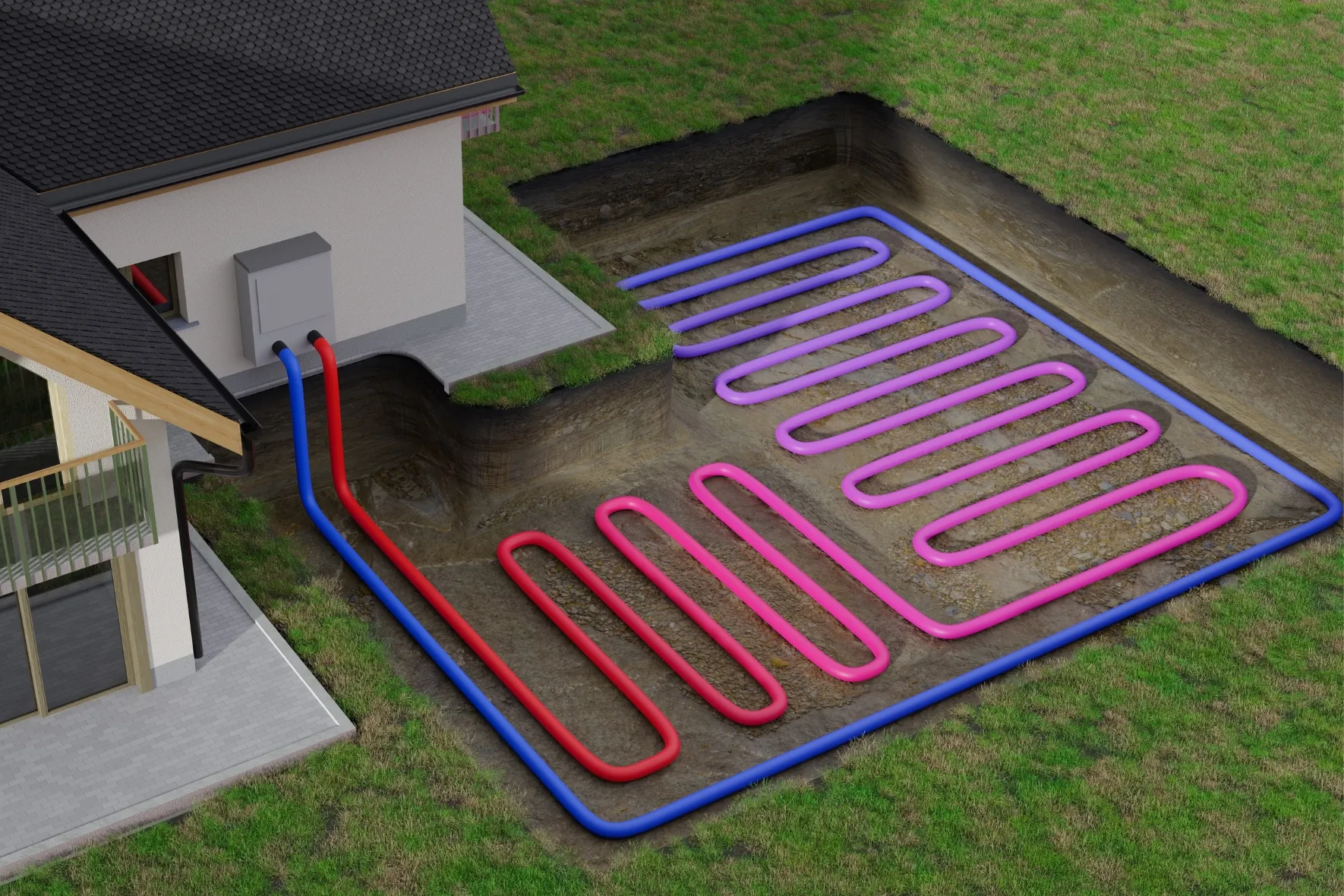
Geothermal HVAC systems may not be the best fit if you live in Minneapolis, St. Paul, or an inner suburb, because the small lot sizes are not conducive to the space required for the loop field installation. They’re also not ideal if you’re looking for the lowest upfront installation cost, or your property has other limitations that make loop installation difficult.
That is why a professional evaluation is so important. Always choose a contractor who can look at your home, clearly explain your options, and help you decide whether geothermal makes sense for your space and budget. If we find that geothermal is not a good fit for your home, we can offer other environmentally friendly options that will fit your budget and space.
Frequently Asked Questions
How Does Residential Geothermal Energy Work?
Residential geothermal energy works by transferring heat between your home and the ground. In the winter, the system pulls heat from the earth and moves it into your home. In the summer, it removes heat from your home and transfers it back into the ground. Because underground temperatures stay more consistent than outdoor air temperatures, geothermal systems can operate very efficiently throughout the year.
Is Residential Geothermal Worth It?
Residential geothermal can be worth it for homeowners who plan to stay in their home long-term and want a highly efficient heating and cooling solution. The upfront cost is typically higher than conventional HVAC equipment, but the long-term energy savings, durability, and year-round comfort can make it a smart investment for the right property.
How Deep Do Residential Geothermal Pipes Go?
The depth of residential geothermal pipes depends on the type of loop system being installed. Horizontal loops are usually placed in trenches several feet below the surface, while vertical loops may be drilled much deeper into the ground. The right design depends on your property size, soil conditions, available space, and system requirements.
Who Installs Residential Geothermal HVAC Systems?
Residential geothermal HVAC systems should be installed by experienced HVAC professionals who understand geothermal design, heat pump equipment, underground loop systems, and local climate needs. In the Twin Cities, Binder Heating & Air Conditioning installs geothermal systems and helps homeowners determine whether geothermal is the right fit for their home.
Explore Geothermal HVAC Options With Binder
Geothermal is not a one-size-fits-all installation. It takes experience, planning, and a clear understanding of how heating and cooling systems perform in Minnesota homes. If you are looking for a more efficient and sustainable way to heat and cool your home, geothermal may be worth a closer look.
Binder Heating & Air Conditioning has been serving St. Paul and the greater Twin Cities metro area since 1927. Our team is known for honest recommendations, quality work, and helping homeowners choose solutions that fit their needs rather than pushing the most expensive option.
Our geothermal HVAC experts can help you compare your options, understand the installation process, and decide whether a residential geothermal system makes sense for your home, budget, and long-term comfort goals.
Visit our Geothermal HVAC Services page to learn more, or contact our team today to talk through your specific needs.