There are cold floors, and then there are Minnesota-in-January cold floors.
If you’ve ever stepped onto tile first thing in the morning and immediately reconsidered every life choice that brought you there, you can probably understand the appeal of in-floor heating.
But warm feet are only part of the story.
In-floor heating can provide quiet, even comfort throughout a room or an entire home. It can be especially appealing during new construction or a remodel, when the floor is already being opened up, and heating options are easier to incorporate.
That doesn’t mean it’s right for every home or every project. Installation can be more involved than conventional heating, some systems respond more slowly to thermostat changes, and the costs depend heavily on how and where the system is installed.
Before deciding whether in-floor heating makes sense for your Twin Cities home, here’s what you should know. Let’s start with the basics.
What Is In-Floor Heating?
In-floor heating, also called radiant floor heating or in-floor radiant heat, warms a room from underneath the finished flooring instead of relying primarily on heated air moving through vents.
Rather than blowing warm air into the room, the floor itself becomes a large radiant surface. Heat rises from the floor and warms the people, furniture, and surfaces in the space.
There are two common approaches to in-floor heating.
1. Hydronic In-Floor Heating
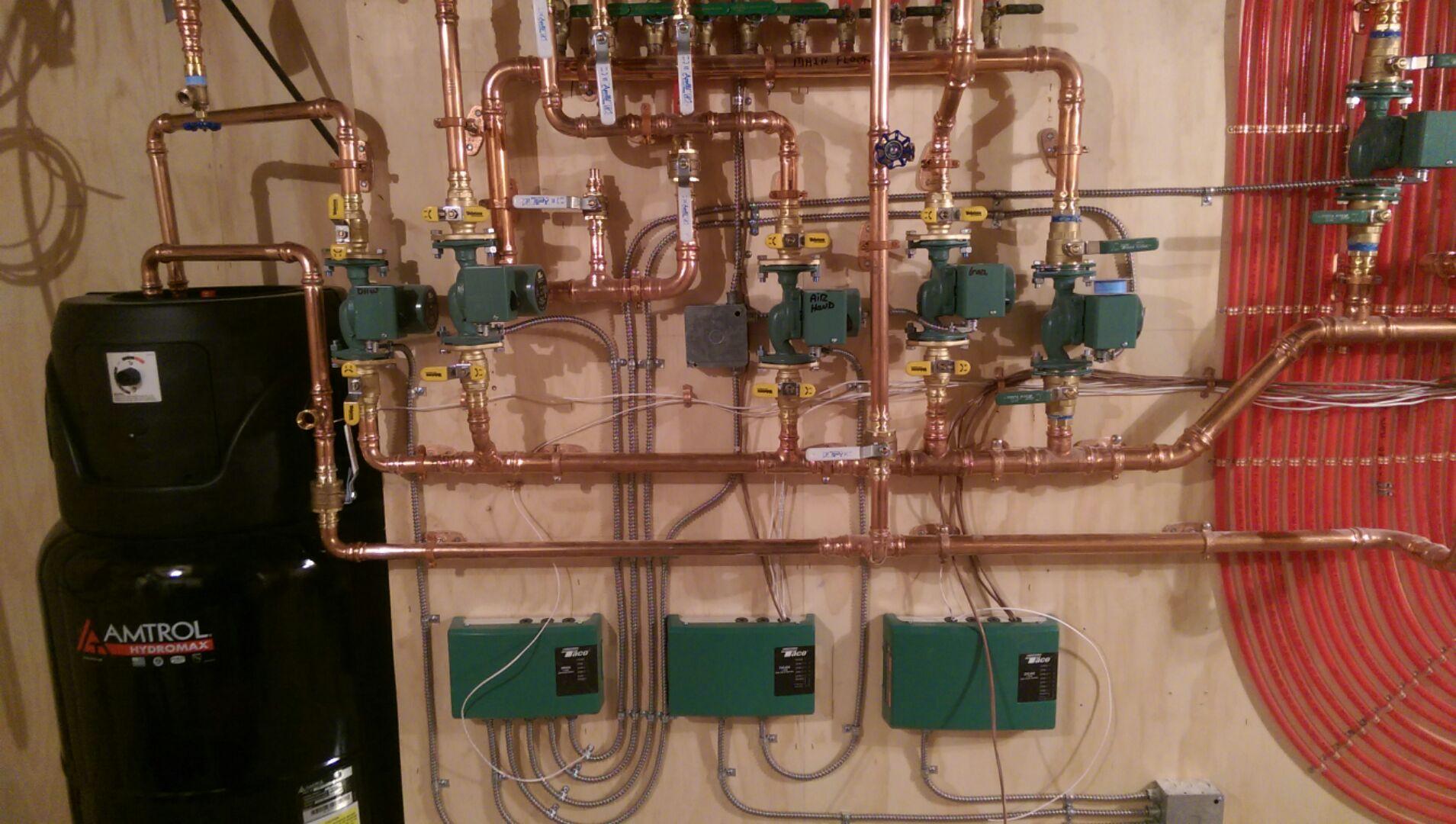
At Binder, we specialize in hydronic in-floor heating. A hydronic system circulates heated water through tubing installed beneath or within the floor. A boiler or another compatible heat source heats the water before it travels through the tubing.
Because the heat is spread across a broad surface instead of entering the room through a few supply vents, hydronic systems can provide very consistent comfort.
They’re particularly attractive for larger spaces, whole-home installations, additions, basements, and new construction where the system can be incorporated into the project from the beginning.
2. Electric In-Floor Heating
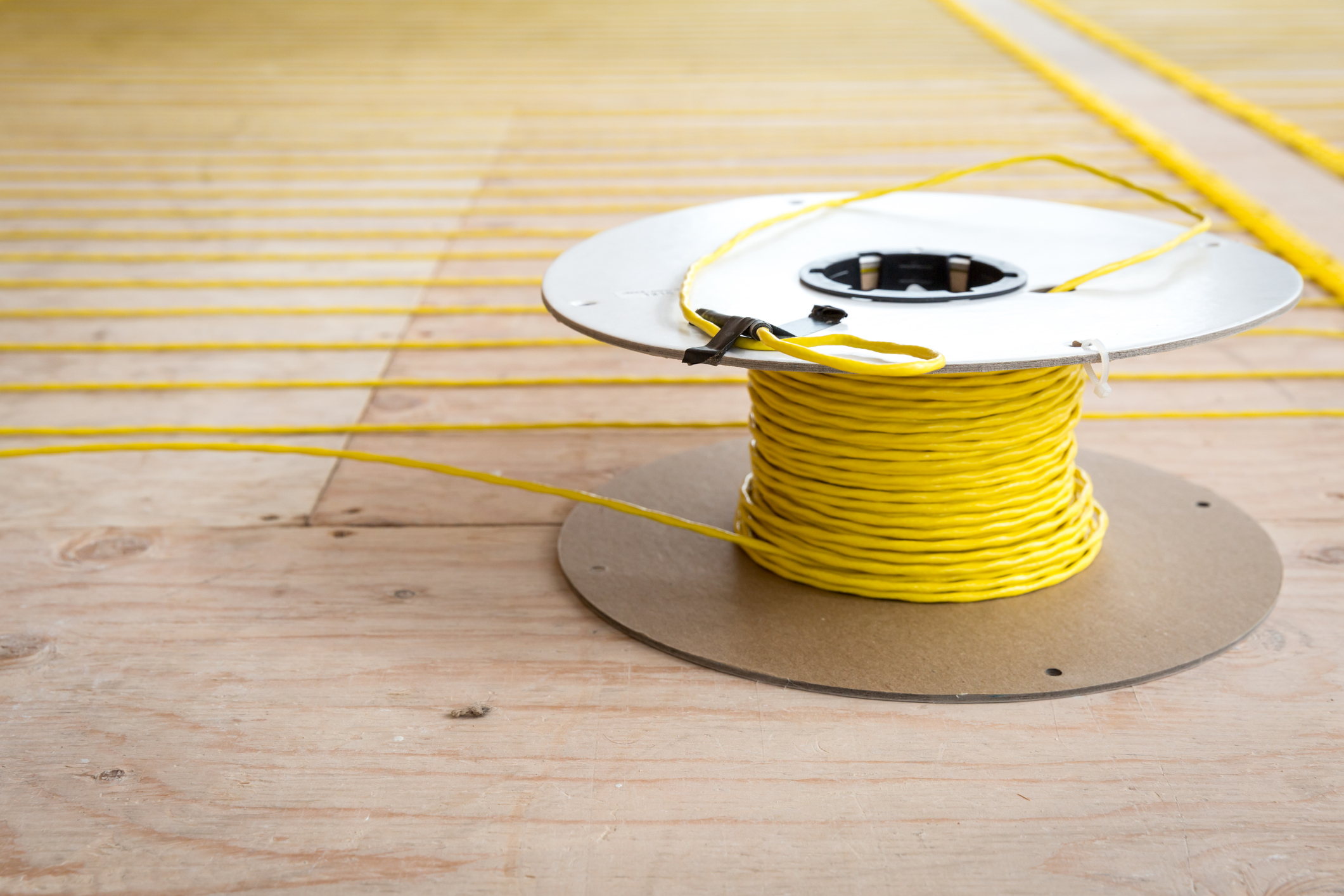
Electric in-floor heating works differently. Instead of circulating warm water, an electric system uses heating cables or mats installed underneath the finished floor.
Electric systems are frequently considered for smaller areas because they can be simpler to incorporate into an individual room. A bathroom, for example, may be a more practical application than attempting to use electric resistance floor heat throughout an entire Minnesota home.
Which system makes sense depends on the size of the project, existing heating equipment, energy sources, floor construction, and how you plan to use the space.
How Is In-Floor Heating Installed?
The installation process depends heavily on whether you’re building new, remodeling, or trying to add radiant heat to an existing finished space.
With a hydronic system, tubing is laid out across the heating area in carefully planned loops. Depending on the construction, those loops may be embedded within a concrete slab or installed as part of another floor assembly. Heated water then circulates through the tubing when the system calls for heat. The flooring material is then installed above the system.

Radiant heating can work beneath many common flooring materials, including tile, certain hardwoods, laminate, vinyl, and even some carpet applications. However, the finished flooring matters because some materials transfer heat better than others. Thick carpet and insulating floor coverings, for example, can reduce how effectively heat moves into the room.
That’s one reason planning ahead is so important.
If you’re remodeling your home, talk with your HVAC contractor before flooring, cabinets, walls, and other finishes are finalized. It’s much easier to plan an in-floor heating system while the room is already under construction than after everything has been put back together.
What Are the Pros of In-Floor Heating?
There are many reasons homeowners love radiant floors once they have them.
1. More Even Heat Throughout the Room
Forced-air systems deliver heated air through specific vents. Radiant floors distribute heat across a much larger surface.
That can help reduce the noticeable hot and cold areas you sometimes experience with other heating methods.
Rather than standing next to a warm register while another part of the room feels chilly, the goal is a more consistent temperature throughout the space.
2. Comfortable Floors During Minnesota Winters
This may be the benefit homeowners notice first.
Tile, concrete, and other hard floors can feel especially cold during winter. Heated flooring makes bathrooms, basements, kitchens, entryways, and other traditionally chilly spaces much more comfortable underfoot.
It’s a small luxury that can feel considerably less small on a February morning.
3. Quiet Operation
Radiant floor heating doesn’t need a blower pushing heated air through ducts to warm the room.
That means you don’t hear the same rush of air or blower operation you may notice with a forced-air furnace.
For homeowners who value a quieter home, that can be a meaningful difference.
4. Less Reliance on Blowing Air
Because radiant heat doesn’t depend on vents to distribute warmth, it doesn’t continuously circulate room air as part of the heating process.
That doesn’t mean radiant heating eliminates indoor allergens or replaces good filtration and ventilation. But homeowners who dislike the air movement created by forced-air heat may appreciate the difference.
Without that constant movement of heated air, some homeowners also find radiant heat feels less drying than forced-air heat, although Minnesota winter air can still become quite dry regardless of the heating system.
5. Potential for Efficient, Zoned Comfort
A properly designed hydronic system can provide efficient heating, particularly when it’s incorporated into the home and building envelope from the beginning.
Radiant heat can also be divided into zones, depending on system design. That gives homeowners more control over which areas receive heat and when.
As with any heating system, actual energy costs depend on the heat source, home insulation, thermostat settings, utility rates, system design, and how the house is used.
What Are the Cons of In-Floor Heating?
The comfort is great, but there are trade-offs.
1. Installation Can Be More Involved
You can’t simply set a radiant system next to the furnace and call it a day.
The heating elements or tubing need to be installed beneath the finished floor. In an existing home, that may mean removing flooring or making other substantial modifications.
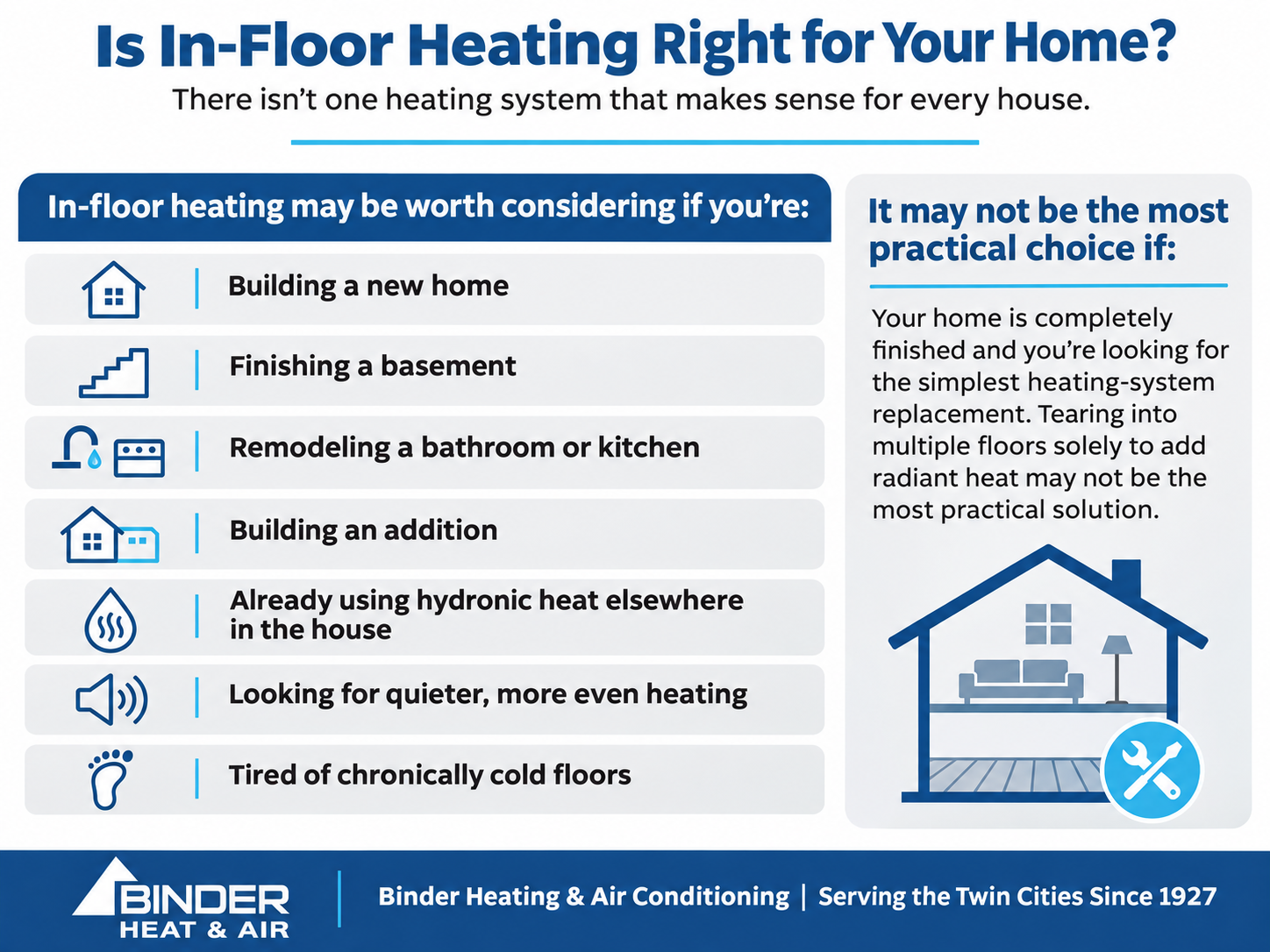
That makes in-floor heating especially well suited to new construction, additions, basement finishing projects, and major remodels where the floors are already part of the work.
2. It Can Take Time to Heat Up
Radiant floors generally don’t provide the same instant blast of warmth you get when a furnace kicks on. Depending on the installation, the system may need time to warm the floor and surrounding materials before you feel the full effect in the room.
The same thermal mass that helps the floor stay comfortably warm can work in the opposite direction, too. Once the floor is heated, it may take longer for the room to cool back down after the thermostat is lowered or outdoor temperatures rise.
Because of that thermal mass, homeowners often get the best results from maintaining a relatively steady temperature rather than constantly making large thermostat changes.
3. Existing-Home Retrofits Can Cost More
Installing radiant heating while a home is being built is very different from installing it beneath an existing finished floor.
Retrofit costs can include demolition, floor removal, new floor assemblies, electrical or boiler modifications, controls, and replacement of finished materials.
That doesn’t make an existing-home installation impossible. It simply makes early planning much more important.
4. Flooring Choices Matter
Not every flooring material transfers heat equally well.
Tile and similar materials are popular over radiant systems because they conduct heat effectively. Other materials may work too, but the flooring manufacturer’s requirements and the heating-system design need to be considered together.
If you’re planning radiant heat as part of a remodel, your HVAC contractor and flooring installer should be part of the same conversation.
5. Radiant Floors Don’t Provide Cooling
In Minnesota, heating is only half the HVAC equation.
Most residential in-floor heating systems are designed to heat the home, not cool it during July and August. You’ll generally still need an A/C system, mini-split, or another cooling solution.
If you’re evaluating your entire heating and cooling setup, our guide to heat pumps vs. furnaces can help you compare other whole-home options.
Are Heated Floors in a Bathroom Worth It?
Bathrooms are one of the most popular places to consider radiant floor heating, and it’s easy to see why. Bathroom floors are often finished with tile or another hard surface that can feel especially cold. You’re also usually walking across them barefoot.
Installing heated floors in a bathroom can turn that traditionally chilly space into one of the most comfortable rooms in the house.
A bathroom remodel is also an ideal time to consider the upgrade. If the existing flooring is already being removed, you have an opportunity to evaluate radiant heat before the new tile or flooring goes down.
Depending on the home, an electric system may make sense for a small individual bathroom, while hydronic in-floor heating may be more practical when radiant heat is already serving other rooms or is part of a larger remodel.
The important thing is to decide early. Adding it after your brand-new bathroom floor is finished is a much less appealing project.
Find the Right Heating Solution for Your Home
The best heating system isn’t determined by a checklist alone. Your home’s layout, existing equipment, construction, comfort goals, and budget all play a role in what makes the most sense.
Binder has helped Twin Cities homeowners make heating decisions since 1927, and our approach is simple: Understand the home first, then recommend the right solution.
If in-floor heating is a good fit for your project, we can help you plan it properly from the start. If a furnace, heat pump, or another heating option makes more sense, we’ll tell you that too.
Ready to talk through your options? Contact us today and let’s find the heating solution that best fits your home—not just the one that looks good on paper.
Frequently Asked Questions
How much are heated floors in a bathroom?
The cost of installing heated floors in a bathroom varies considerably based on the room size, electric versus hydronic heat, flooring material, whether the existing floor has already been removed, electrical or boiler requirements, and labor. Installing radiant heat during a planned bathroom remodel is usually more straightforward than removing and rebuilding a finished floor solely to add heat. Binder can evaluate your space and provide a project-specific estimate.
Is in-floor heating efficient?
In-floor heating can be efficient when the system is properly designed, and the home is well insulated. Radiant heat distributes warmth across a large surface and can provide comfortable temperatures without relying on forced-air distribution. However, efficiency varies based on the heat source, system design, insulation, flooring, thermostat settings, and energy prices. Hydronic and electric systems also have very different operating characteristics, so there isn’t one efficiency number that applies to every radiant floor.
How much electricity does in-floor heating use?
It depends on the type of system. Electric in-floor heating uses electricity directly to warm cables or mats beneath the floor, so consumption depends on the system’s wattage, heated square footage, thermostat setting, and how long it operates. Hydronic in-floor heating is different. Heated water circulates through tubing, so the system’s primary energy use depends on the boiler or other heat source, while electricity is also used by components such as pumps and controls. A professional can estimate expected energy use based on the specific system and space.
Can in-floor heating be used for a driveway?
Yes. Radiant or below-ground heating can also be installed beneath driveways, sidewalks, and other outdoor surfaces to help melt snow and reduce ice buildup. These snowmelt systems typically involve tubing or electric heating elements installed beneath the pavement and can be a major investment because of the large area being heated, installation requirements, and energy needed to operate them.
They certainly aren’t a necessity for most Minnesota homes, but some homeowners love the convenience. A heated driveway can mean less shoveling, less reliance on ice melt, and fewer icy patches on frequently used walkways or driving surfaces. For homeowners who prioritize convenience and winter safety and are comfortable with the added cost, it can be an appealing upgrade.